


StepDown
Software: Creation Kit
Development time: 200 hours
Platform: PC | Steam
Average Playtime: 20-30 minutes
Level Summary
The level is set in a remote settlement on the planet Gagarin, the player is sent to investigate a surge of organ trafficking cases in Novark Town. Clues lead them from a club investigation to the center of the Hirakulu Company Lab, where they uncover disturbing medical experiments.
The mission features branching dialogue, scene-based storytelling, and multiple gameplay elements including puzzle-solving, combat, and skill-based interactions such as persuasion, stealth, digipicking, and bribery. It culminates in a final moral choice that challenges the player’s ethics and influences the story’s resolution.
Level parameters:
-
15+ minutes of gameplay
-
1 exterior space
-
1 interior space
-
1 main quest
-
1 side quest
-
1 morally-grey choice with branching ending
Gameplay
Design Goals
Diverse Gameplay
Level supports a wild range of playstyles - from aggressive firefights to stealth and skill-based solutions like turret hacking, persuasion, and bribery.
Exploration & Replayability
Through intentional Level design techniques, leads players revisit key spaces with new abilitys and perspectives - unlocking shortcuts, uncovering additional narrative context through interactions.


Progressive narrative
Quests are designed with a complete narrative arc and built through multi-branch dialogue, environmental storytelling, and a robust quest system that adapts to non-linear player choices without breaking progression.

Visual Conveyance
Lighting, landmark silhouettes, and in-world signage guide players intuitively through objectives, minimizing the need for HUD markers and preserving immersion.

Design Progress
Level Layout - Novark Town Center
The level begins in an exterior area, Novarke Town, which is designed as the central hub that players revisit multiple times throughout the quest.
The two main interior buildings where the quest primarily takes place are positioned on the left and right sides of the town and are marked with large, bright LED lighting to serve as clear visual landmarks.


The triangular layout supports smooth player flow with minimal backtracking and provides efficient routes between objectives while maintaining strong spatial clarity.

A central statue is positioned in the town square as a key landmark, guiding player orientation while contributing to the visual identity of the environment.
The clinic’s spherical rooftop serves as a secondary landmark. It not only marks an important destination, but also subtly guides players deeper into the area toward the Club.


Level Layout - Club

Club - Dance Floor
In the first interior—the sub-final objective—the boss, “Jake,” is positioned on the second floor in front of a large window, immediately visible from the player’s point of view.

Moreover, along the player’s sightline, both the entrance to the club’s backstage and the Quest NPC are clearly visible, establishing the next objective and naturally guiding the player forward into the next space.
The dance floor is designed as an open space to increase the verticality of the environment. Stairwells positioned along the sides provide efficient vertical traversal, allowing players to move up and down freely.
This open space later becomes the encounter area when players confront Jake. The increased verticality supports more dynamic combat choices, giving players opportunities to reposition, control space, and gain tactical advantages from higher ground during the encounter.

Club - Backstage First Floor

On the first floor of the Club backstage, the layout is designed around a circular movement flow.
While the objective is visible through glass, the direct path is blocked, encouraging players to loop through the side offices before reaching the stairs.
The space was blocked out using narrowed hallways to encourage players to move carefully and approach the area with stealth skill.
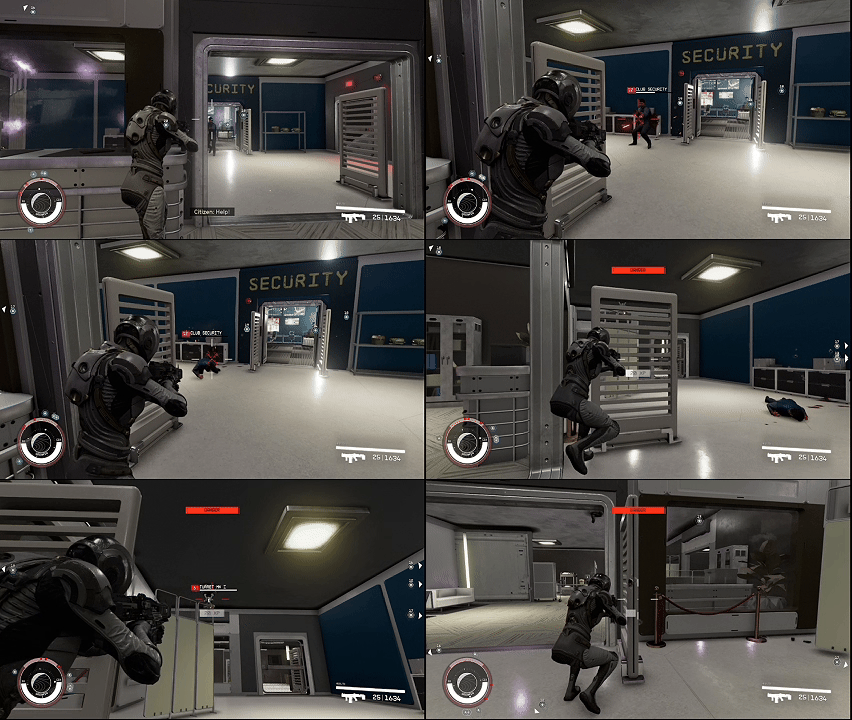
Club - Backstage Second Floor

On the second floor, the space becomes more open and expansive, to support a larger combat encounter in the area.
Side rooms provide cover options, as well as retreat shortcuts, while M/L object placement along the hallways pushes players forward and guides them toward the boss encounter.

As players progress, more shortcuts unlock to support faster retreat and minimize repetitive backtracking through the building.
Level Layout - Lab

This area was refined multiple times during development. To better serve the narrative, I revised the original concept from an abandoned building to a laboratory space.
Original Design Draft
Lab - First Floor

Lab - Second Floor

Shift of Layout:
The second-floor structure also went through several iterations during development.
In early versions, players accessed the second floor through patient rooms, with the office area placed on the right side, causing repeated backtracking during quest progression.

Through several playtests, reflect that this layout disrupted pacing and navigation clarity due to frequent hallway revisits.
To improve flow, I relocated the office area to the left side of the map and added a new stairwell connecting directly to it. I also introduced an additional encounter to reinforce progression and guide player movement.
As a result, players now follow a clear looped path from the office area back to the main hall and toward the CEO office, which serves as the final encounter and player choice.
Combat Encounter Showcase
Combat encounters were designed around cover placement, enemy variety, and player repositioning.
Exterior spaces provide wider sightlines and flexible movement, while interior lab spaces create tighter, more focused combat pressure.
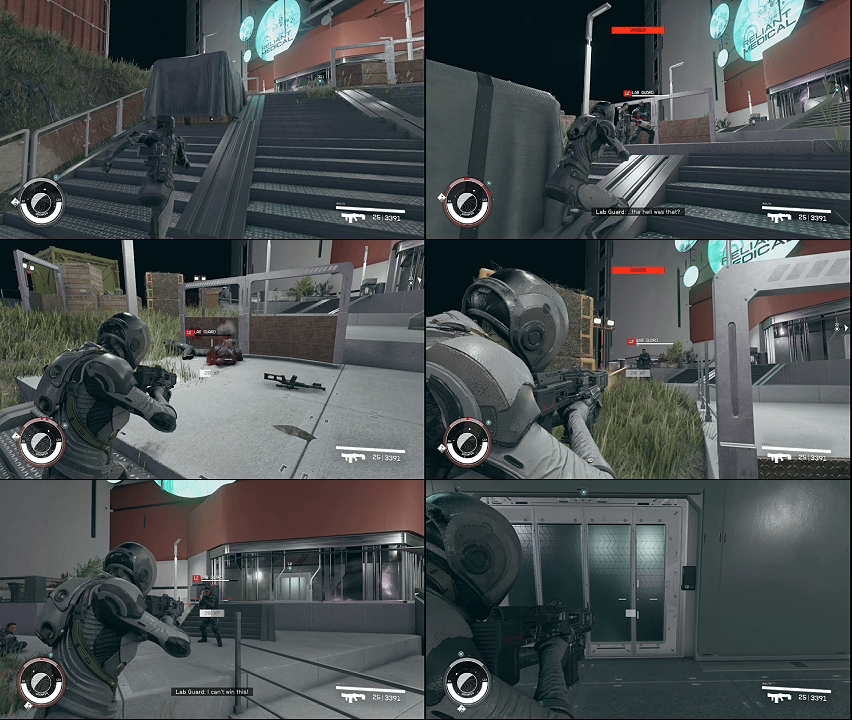
Exterior Encounter
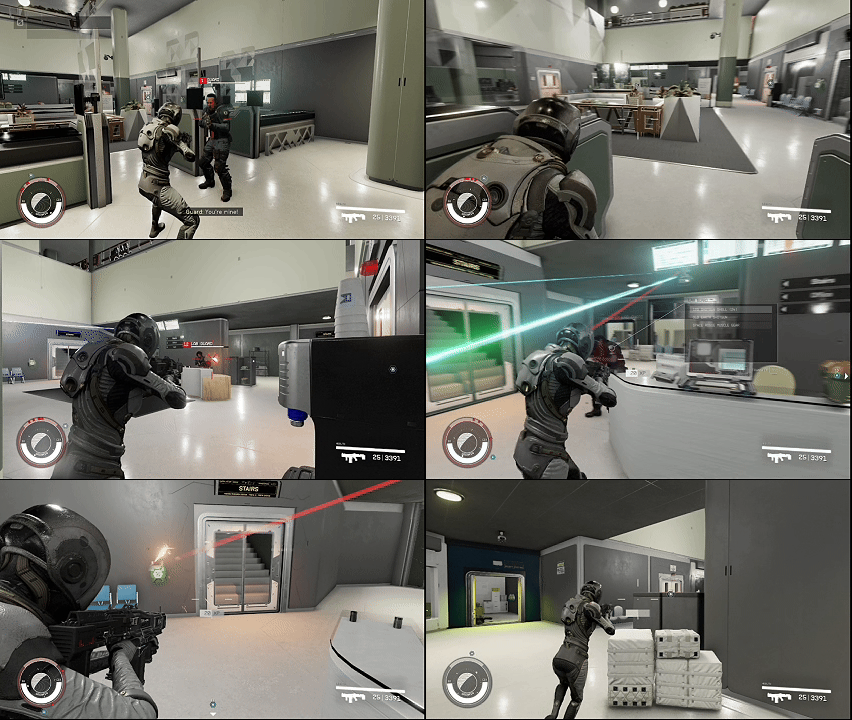
Interior Encounter - Lab Space
By combining ranged and melee enemies, the encounter encourages players to break line of sight, switch positions, and adapt their combat strategy throughout the fight.
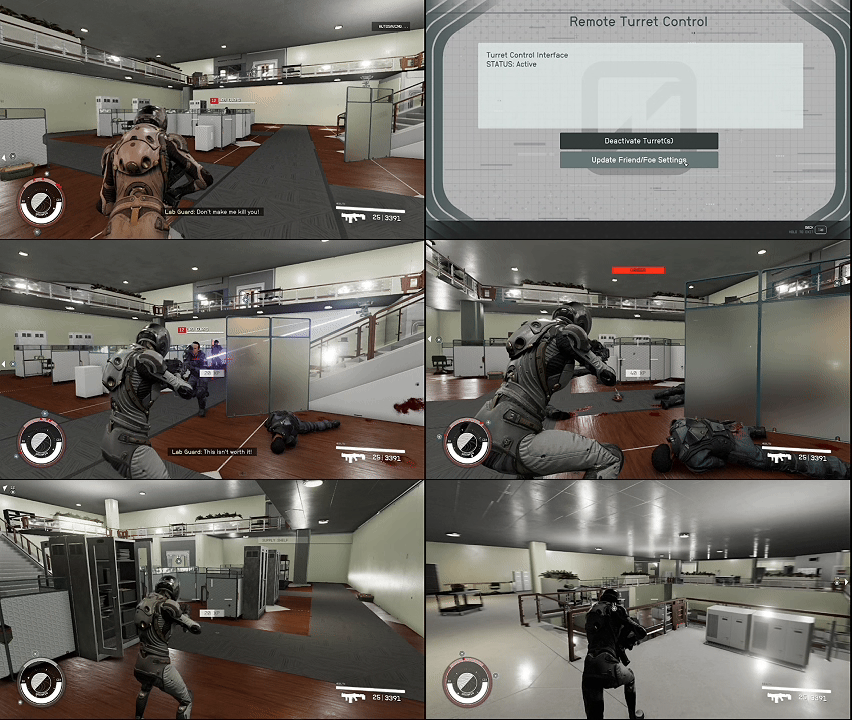
Featured Interaction Mechanics
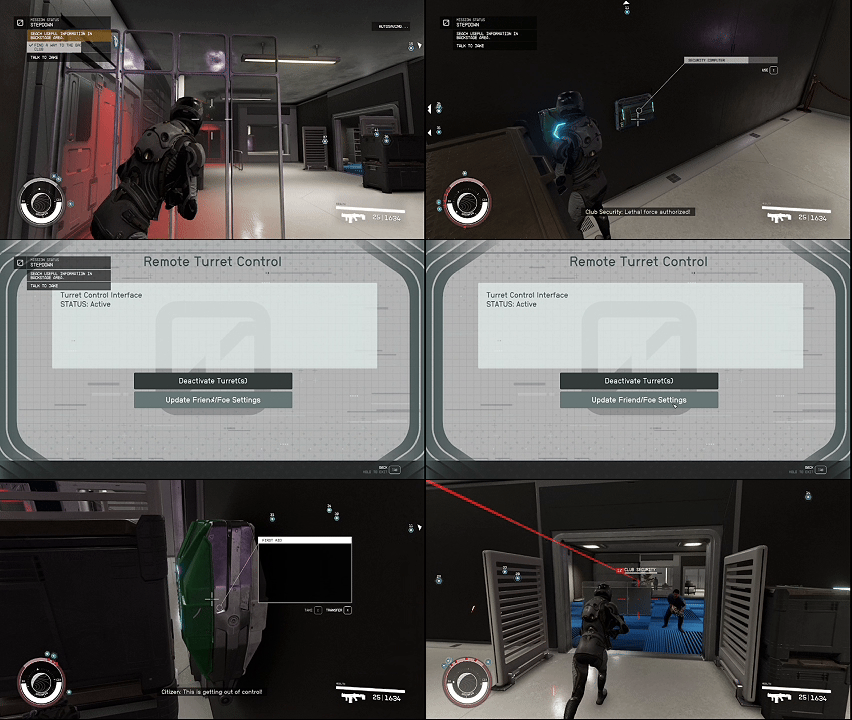
Haking System
Turret hacking provides an alternate combat solution by allowing players to convert hostile defenses into friendly support, rewarding exploration and system interaction.
Object Interaction
Interactive objects serve as narrative and progression tools, allowing players to uncover key information, update objectives, and advance the quest through environmental investigation.
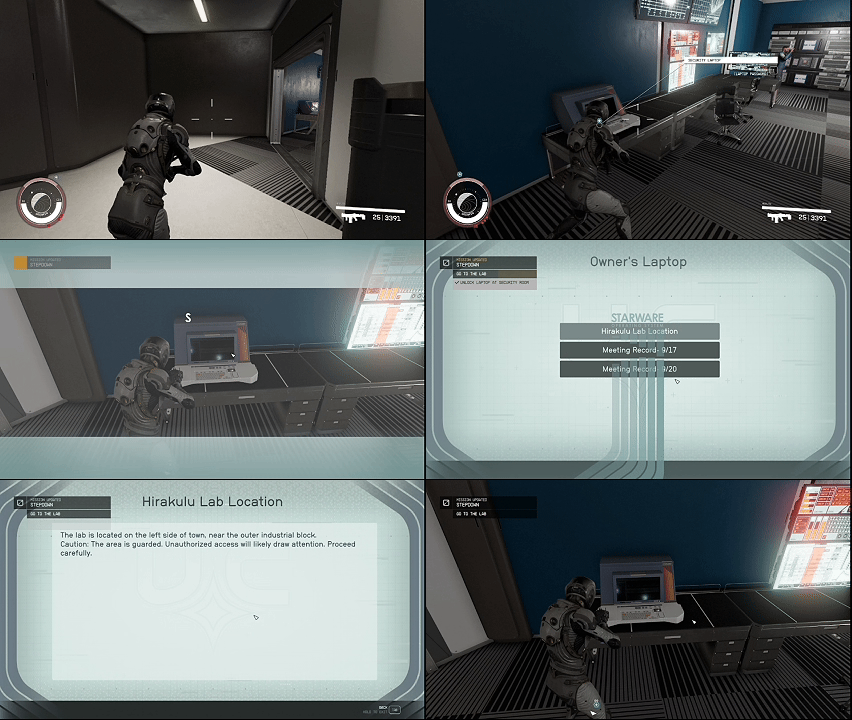
Laptop Logs reveal critical story context and guide players toward the next objective.
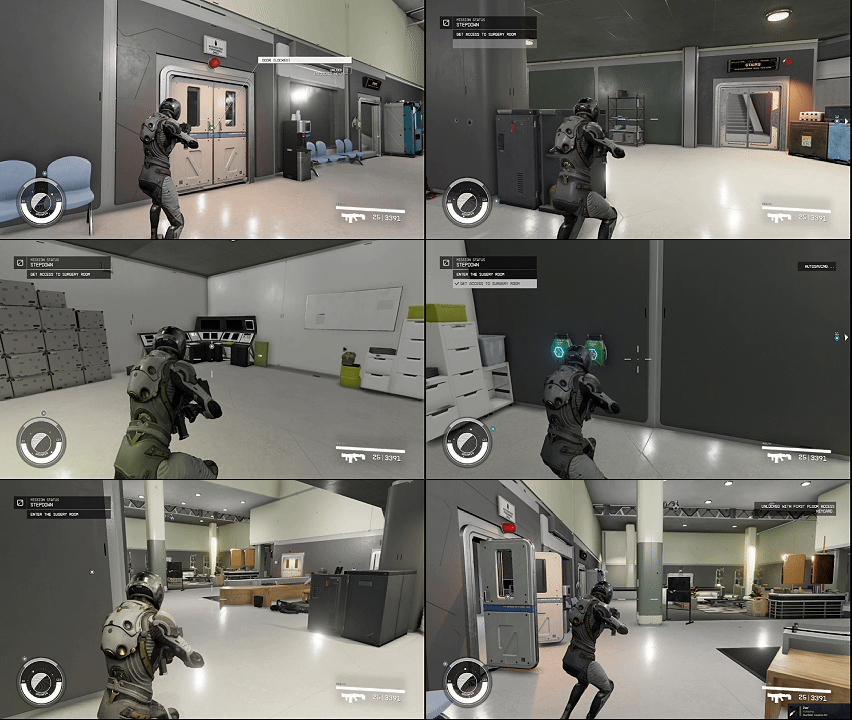
Key Items unlock restricted paths and create clear progression gates.
Narrative Progression
The quest begins as a missing-person investigation in the town of Novark. Through exploration, environmental storytelling, and conversations with local residents, players gradually uncover clues instead of receiving direct exposition.
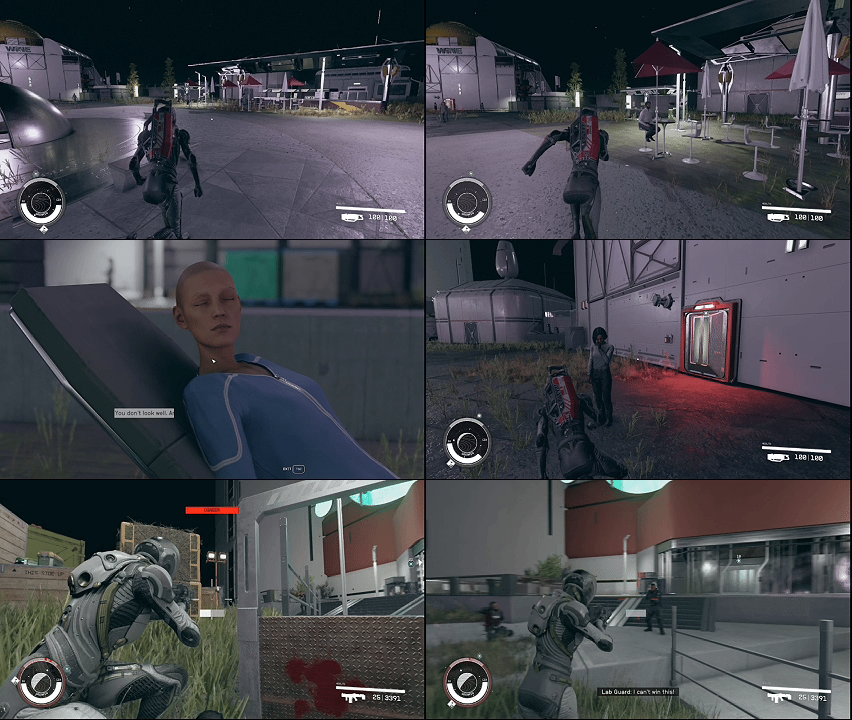
Turning Point 1
Players discover that the missing-person cases are connected to an underground organ trafficking operation.
This shifts the quest from a local investigation into a larger conspiracy.

Turning Point 2
Players learn that the laboratory uses human experimentation to develop a cure for the town’s disease.
This reframes the conflict as a moral dilemma rather than a clear good-versus-evil choice.

Quest Structure Design

The quest is designed as a complete narrative experience built around multi-branch dialogues, where player choices directly shape outcomes. Throughout the quest, different dialogue options lead to distinct consequences, reinforcing the core theme that choices matter.
From the initial LDD to the Game Complete milestone, I iterated on the quest structure multiple times to strengthen narrative clarity and player agency. For the final decision point, each option presents clear trade-offs—with at least two advantages and disadvantages—encouraging players to think, reflect, and take ownership of their choice.
Robust Quest Structure
The quest is built around a robust state-driven structure to ensure progression remains stable even when players complete objectives in an unexpected order.
Each interactive event is assigned an independent Quest Stage threshold, allowing triggers, dialogues, and objectives to activate only when their required conditions are met. This event-driven structure maintains narrative pacing, preserves logical progression, and prevents sequence breaks while still supporting player freedom during exploration.

Each gameplay event validates the current Quest Stage before execution, ensuring progression remains stable regardless of exploration order.

Player Agency
Player agency is built through:
-
Dialogue choices
-
Optional interactions
-
Environmental storytelling
-
Relationships with key NPCs

Dialogue Branching
-
Critical Information
-
NPC Bonding
-
Bonus Lore

Skill-Based Dialogue
-
Persuasion / Bribery
-
Combat Alternative
-
Multiple Solutions
By exposing different perspectives before the finale, the quest encourages players to evaluate the trade-offs themselves and make a final decision that reflects their own values.

Dialog branching design in Engine
Choice & Consequences
Final decisions are tracked through Quest Stage states, allowing different choices to trigger distinct ending scenarios.
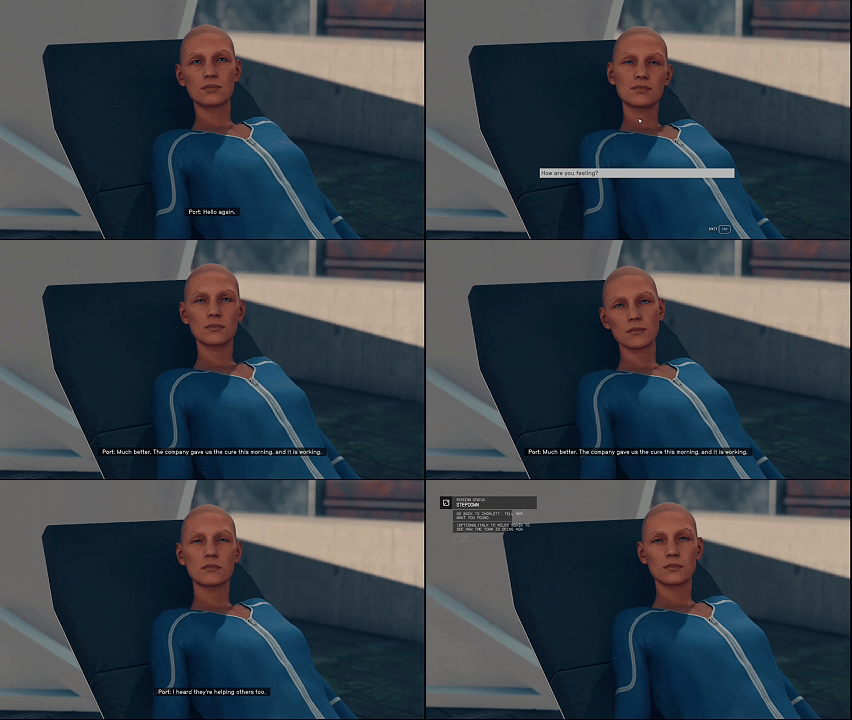
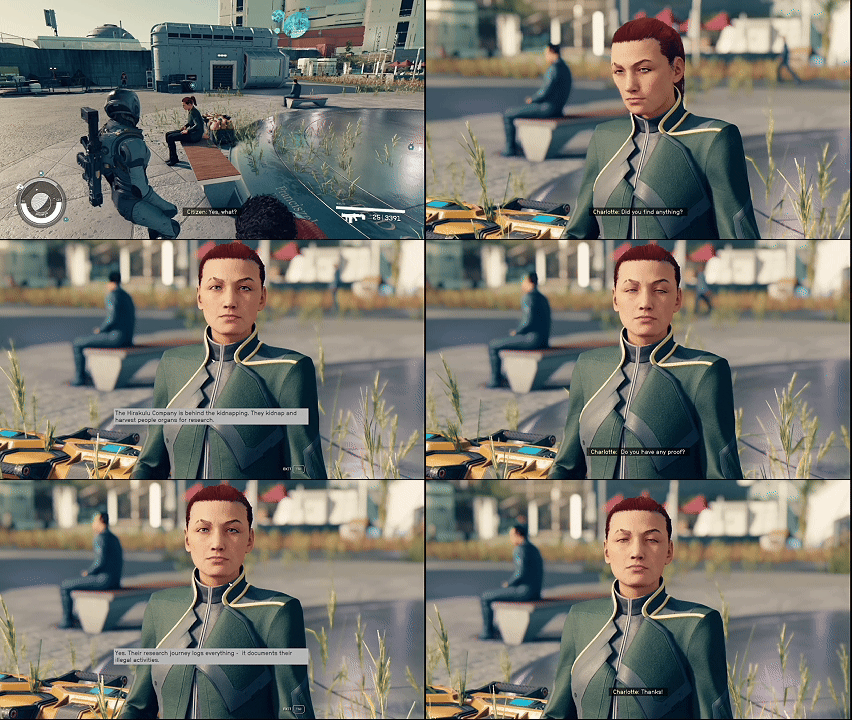
After the final decision, the level presents consequence scenes that reflect the player’s choice. Each branch changes the ending state of the world, showing how the player’s decision affects the town, the patients, and the people involved.

Outcome 1 — Support the Research
-
Cure Developed
-
Human Experimentation Continues

Outcome 2 — Shut Down the Laboratory
-
Human Experimentation Ends
-
The Cure Is Lost

Quest Scripting
Implemented complete quest using Papyrus scripting, including:
-
Quest stage setup
-
Scene setup
-
Trigger logic
-
Interactive consequences


