


Flee from the Lab
Software: Hammer Editor | Half-Life 2
Development time: 80 hours
Platform: PC | Steam
Average Playtime: 10-15 minutes
Level Summary
Flee from LAB is a single-player level built in the Half-Life 2 universe, The main character, Gordon Freeman, is captured and taken to the enemies’ laboratory. This level offers a careful balance of combat and puzzle-solving. Players need to fight through enemy encounters while navigating battery-based mechanics to progress.
Level Features:
-
10–15 minutes of gameplay
-
3+ combat encounters with increasing intensity
-
Gravity Gun-based physics combat
-
Battery-based progression puzzles
-
2–4 enemy types including aerial threats
-
Revisited rooms with changing enemy routes and puzzles
Level Overview

Design Goal
Unique Mechanic
Battery-based puzzles are layered and escalate in complexity, requiring players to unlock, reuse, and creatively combine resources to progress through the lab.
Verticality
Multiple elevation levels—including second floors, ledges, and falling ceilings—encourage players to think spatially during both puzzles and combat encounters.
Smooth Combat Flow
Combat spaces feature circular layouts, destructible and permanent cover, and varied enemy types to ensure fluid, engaging battles across all areas.
Puzzle mechanics
Inspired by Half-Life 2's physics-driven puzzle design, this level introduces a battery collection system as the core mechanic.
Players must locate and retrieve batteries to unlock doors and access new areas—gradually learning the system through increasing complexity.
-
Early puzzles teach simple battery-slot mechanics.
-
Later puzzles combine breaking walls, reusing batteries, and navigating multistep flows.
-
Visual cues like cables, light colors, and highlighted batteries reinforce the mechanic.
-
Combined with enemy placement and backtracking design, this mechanic creates a satisfying rhythm of combat → puzzle → progress.

Battery puzzle

Breakable puzzle with falling ceiling
Design Thoughts
Progressive Difficulty and Pacing
The level is designed to gradually increase in difficulty, ensuring a smooth gameplay flow. Early encounters introduce core mechanics, such as battery-based puzzles and basic combat.
As the level progresses, the challenges increase with multi-step puzzles that add depth and keep players engaged, along with medium-to-large encounters that test their combat skills and enhance the player's understanding of gameplay mechanics through the strategic use of objects.

Blend Mechanics
In the early spaces, I introduce basic gameplay mechanics and reinforce them through repetition. Once player has already learnt all the mechanics, I I begin blending them together to create more complex, multi-step puzzles that require planning and problem-solving.

In one room, players must unlock a door using a battery they previously acquired. However, retrieving the battery again requires them to use explosive objects to break a wall separating two spaces. This pushes players to combine prior knowledge—resource management, environmental interaction, and spatial reasoning—while committing to a decision that temporarily limits access to the current area.
Level Layout

Framing

Player start with a clear view of Final Goal
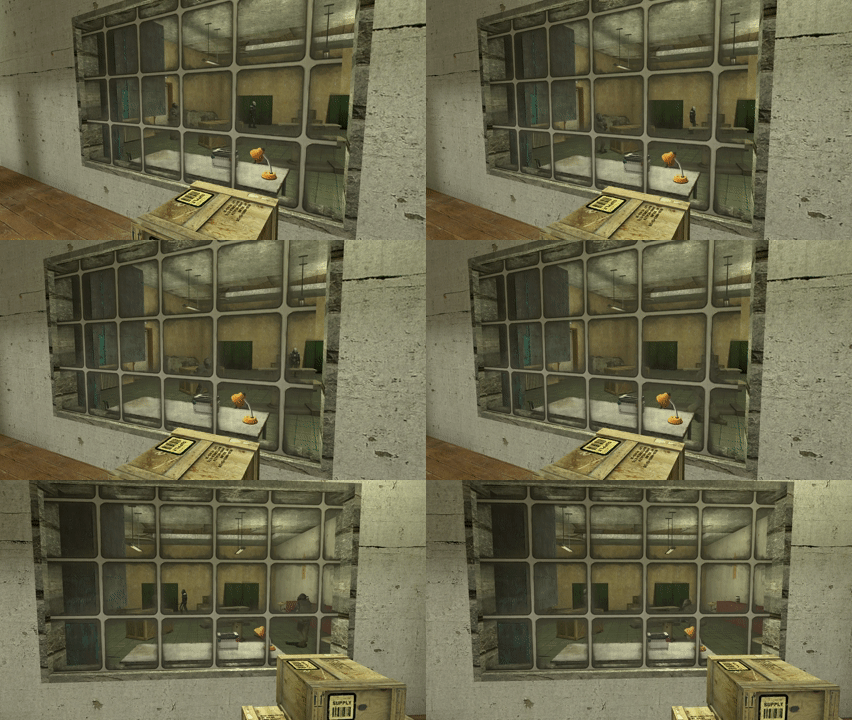
Windows provide safe observation points for enemy scouting
AI Behavior
-
Placed patrol routes to control enemy awareness and encounter flow
-
Encouraged tension and anticipation by allowing enemies to move through shared spaces
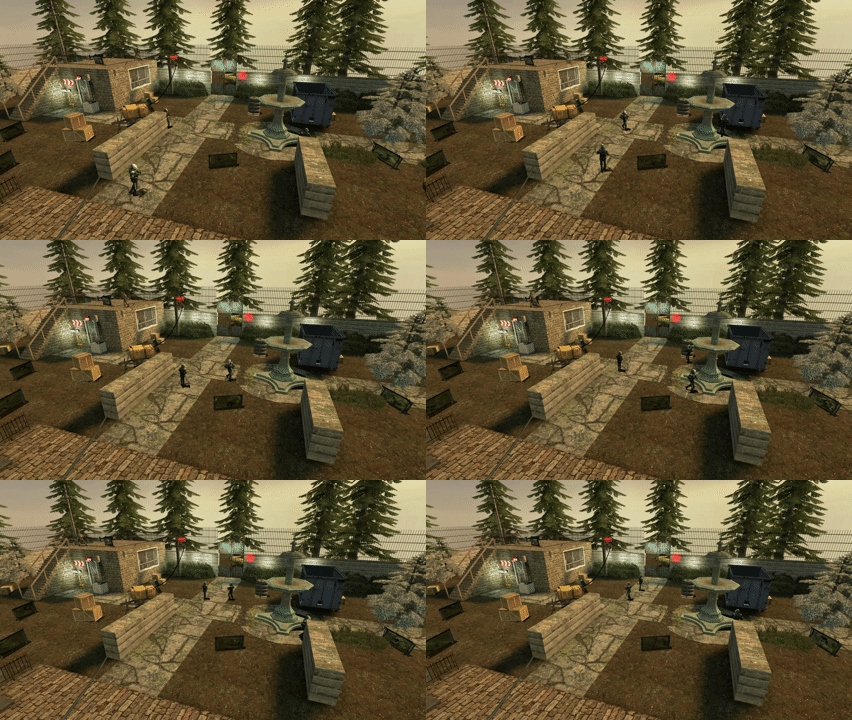
Outdoor Patrol Routes: Enemy movement creates pressure around key traversal paths
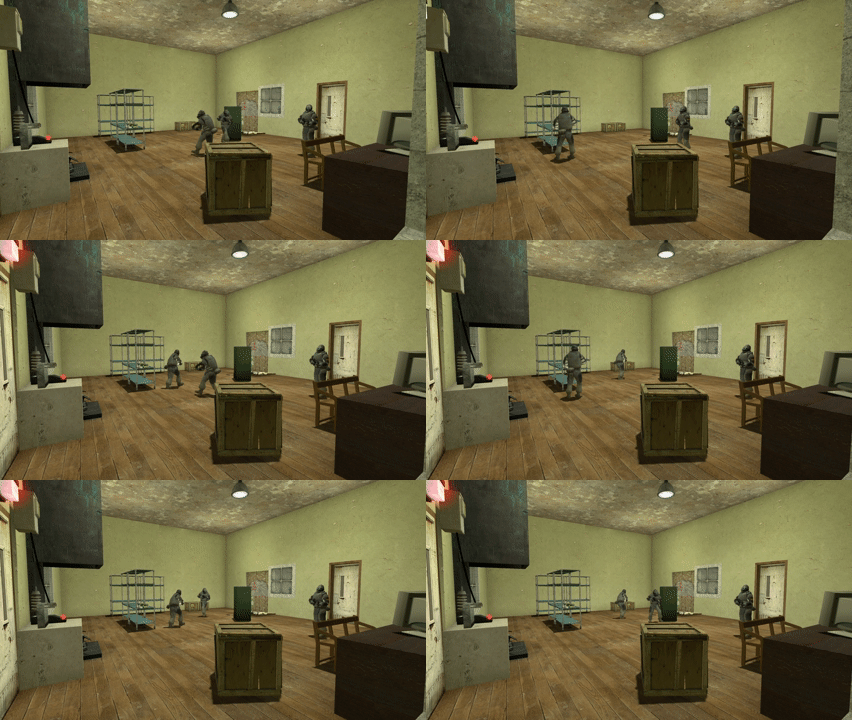
Interior Enemy Placement: Entrances, cover, and sightlines create multi-directional combat pressure
Skill Progression

Control Pacing & Avoid difficulty spikes
-
Early sections focus on basic movement, shooting, battery puzzles, and Gravity Gun interaction.
-
Mid-level sections combine combat, puzzle-solving, and backtracking to increase player pressure.
-
Later sections test player mastery through denser enemy setups, multi-step puzzles, and varied weapon usage.
Gallery


Post-Mortem
What Went Well?
Iterations
I made steady progress within each milestone according to the feedback I received. During millstones, I found lots of people to playtest my level so I could have a overall evaluation of my level. Whenever an issue was identified, I always found alternative solutions to address and resolve it.
What Went Wrong?
Details could be polished
During the design process, I made some careless mistakes, such as leaving floating objects in the level, which were pointed out during playtests.
What I Learned?
Pay Attention to Detail
Focusing on the finer details can help avoid careless mistakes and improve the overall quality of work.
Stay within Scope
I has track the scope of my level in each milestone and schedule meets with Professor to get detailed feedback. I read the parameters carefully to make sure very work I do is meeting the requirements.
Level decoration
The level works fine but I am not satisfied with the decoration, Specifically, I feel that certain rooms could have been more polished, and if given more time, I would have refined both the decoration and the BSP layout.
Have as much as playtest
It’s crucial to Have as much as playtest you can and communicate any changes or challenges with the professor to receive timely assistance.
Finish each milestone and hand in on time
I have good time management on delivering the assignment on time with quality assurance.