


Silent Protocol
Software: Creation Kit
Development time: 40-50 hours (8 weeks)
Platform: PC | Steam
Average Playtime: 20-30 minutes
Level Summary
"Silent Protocal" is a single-player level for Starfield, set in a military research lab on a Jemison planet. Assigned by a contact – Zing in New Atlantis, the player must infiltrate the high-security facility to rescue Doctor Shawn, a captured scientist, that acknowdge the technology to build missial that could have largely destruction.
The level focuses on stealth, tactical movement, and environmental awareness as players avoid patrols, gather key items, and access restricted zones.
Level parameters:
-
15 minutes of gameplay
-
1 exterior space
-
1 interior space
-
1 main quest
-
Branching dialogues
Trailer
Design Progress
Map Layout


This was the initial design for the facility interior. The overall layout is structured to establish spatial awareness from the start.
Player begins the quest in a visitor area with a clear view into the facility through glass panels, allowing them to observe enemy placement, also foreshadowing the level’s stealth-focused gameplay.
Pacing

Throughout the level, several areas are intentionally designed for stealth practice. To maintain strong pacing, each stealth encounter is followed by a designated “safe zone” where players can gather supplies and recover, reinforcing a tension–release cycle.
Map - Iterations


Whitebox Stage Layout
Final Layout
In the early design, after rescuing the Quest NPC, players were required to retreat through a backtracking route, passing through the same supply room they had previously explored. This reduced the sense of progression and spatial novelty.
Based on multiple playtests, I iterated on the layout by introducing an additional hallway that reconnects to the visitor area. This adjustment unlocks a previously restricted space, expanding the playable area and reinforcing the facility’s thematic cohesion.
The new route also introduces an additional encounter, allowing players to approach their final confrontation either through stealth or direct combat, supporting greater player agency and tactical choice.
Design Goals
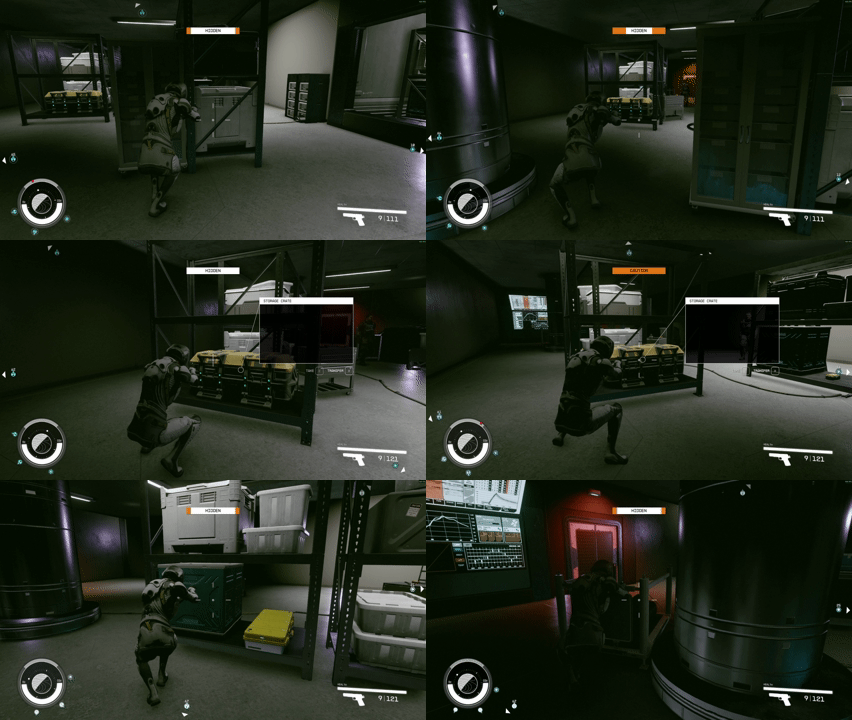
Stealth Gamplay
Design the level layout to support stealth-focused movement, strategically placed obstalcs and level geometry to create multiple viable stealth paths.
Dynamic environment
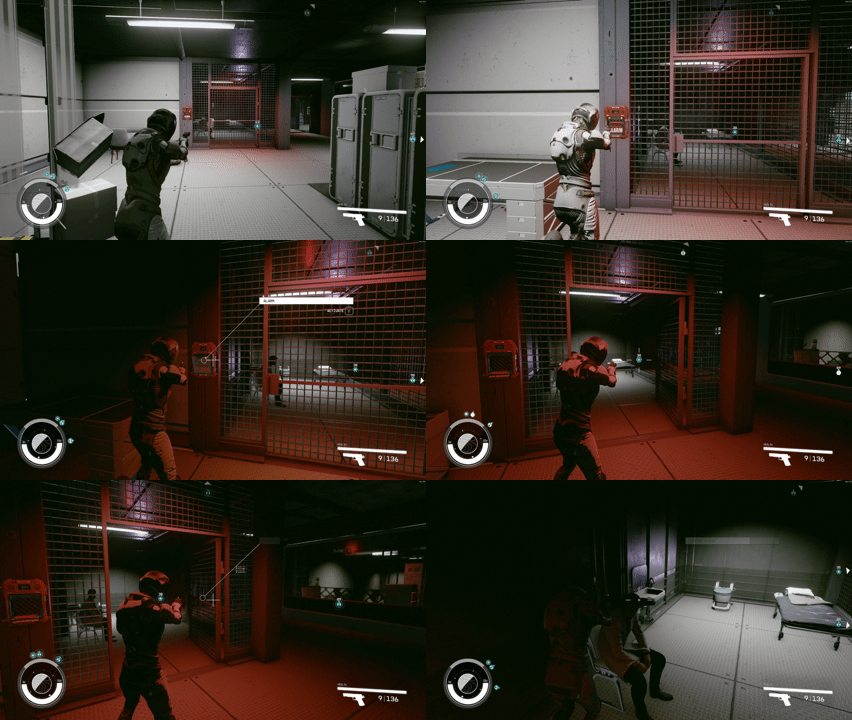
Introduce environmental changes driven by quest progression, such as interior lighting shifts and newly unlocked routes, to reinforce the level’s theme and evolving gameplay.
Visual Conveyance
Through using light contrast, sightline control, and local landmark to guide player alone the intended path

Stealth Gamplay
This level is designed to support stealth-oriented play by providing clear opportunities for planning, observation, and controlled engagement.

1. Stealth Routes & Cover
-
Strategically placed level geometry and covers
-
Creating clear and readable stealth routes through the space.
2. Enemy Patrol Design
Each enemy is assigned a unique patrol route consisting of 2–4 patrol points, along with carefully tuned view angles and AI behavior.
These patrol patterns create intentional blind spots, allowing players to observe routines, plan movement, and execute stealth approaches.


3. Resource-Limited Combat Incentives
To reinforce stealth-oriented decision-making, the player is initially equipped with a sniper rifle and given limited ammunition. This encourages careful shot selection and resource management, discouraging prolonged firefights and rewarding stealth over direct confrontation.

Dynamic environment
1. Progressive Access & Spatial Recontextualization
-
Restrained area
-
Early in the level, many areas are intentionally blocked through locked doors and restricted zones. These barriers not only guide players toward critical objectives but also communicate narrative progression within the facility.
-
-
More open space on later stage
-
As players acquire key items and advance the quest, previously inaccessible spaces gradually open up, allowing players to revisit familiar areas with new access, shortcuts, and understanding of the overall layout. Circular routes and newly unlocked paths help recontextualize the space, encouraging players to navigate it with fresh perspective.
-

2. Lighting State Changes as Narrative Signals
-
The environment visually reacts to narrative events.
-
Increased urgency in the narrative.
-
-
Lighting change serves as a clear visual cue
-
communicating the player’s next objective.
-


3. Encounter Waves & Dynamic Difficulty
-
Designed revisitable combat spaces where enemy presence changes based on quest progression and player routes
-
Implemented dynamic enemy waves that scale in difficulty to support narrative escalation and gameplay challenge
-
Enemy difficulty scales with player level
-
Wave 1: ~0.8× player level
-
Wave 2: ~1.2× player level
-
-
-
Early encounters introduce light resistance, while later returns trigger stronger enemy responses to reinforce heightened security

Visual Conveyance
1. Lighting contrast
-
Draw player attention
-
Communicate the next objective
-
Brighter lighting is applied to key gateways and points of interest, encouraging players to move forward and exploring the space.
-
-
Environmental cue
-
Doors marked with red lighting indicate danger or restricted access
-
Doors with green lighting signal a safe and clear path forward
-


2. Clear Sightlines
Each new space is composed so that primary objectives fall naturally within the player’s sightline upon entry.
Environmental framing and transparent elements, such as glass panels, are used throughout the level to maintain visibility of routes and goals, helping players orient themselves without overrelying on UI prompts.
Through the glass, the red-lit door makes the player’s next objective visible, clearly guiding their direction of travel.


