


Level Summary
Echoes of Manor is a single-player psychological horror level built in the Half-Life 2 Source Engine.
The level explores how abnormal environmental design—including looping spaces, non-Euclidean architecture, impossible layouts, and dynamic environmental transformations—can generate psychological tension without relying on enemies or combat.
Players progress through a seemingly ordinary mansion that gradually becomes increasingly distorted. By combining spatial anomalies with environmental storytelling, exploration, and light puzzle-solving, the level creates a tension–release pacing that maintains engagement while reinforcing a growing sense of unease.

Level Overview

Core Gameplay
Exploration
Narrative
Puzzle


Players investigate the mansion by reading notes, examining objects, and collecting key items that reveal the story of the house.
These interactions guide players through the level while gradually exposing the mansion’s supernatural changes.
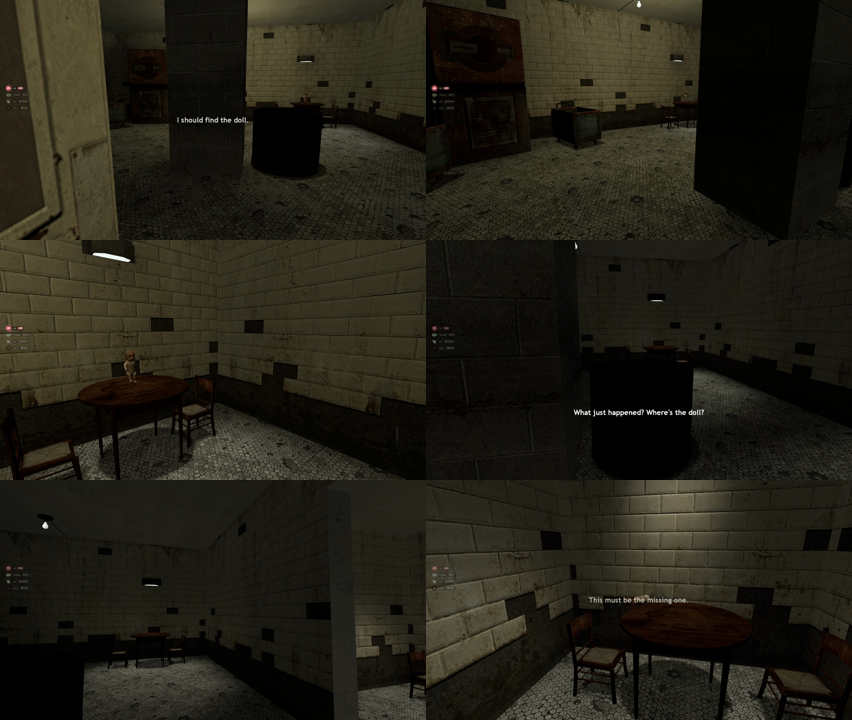
Puzzle progression is built around object-based interaction. For example, players collect objects and place them into specific positions to unlock new paths or trigger environmental changes.
This creates a gameplay loop of exploring, discovering clues, collecting items, and using them to progress through the mansion.
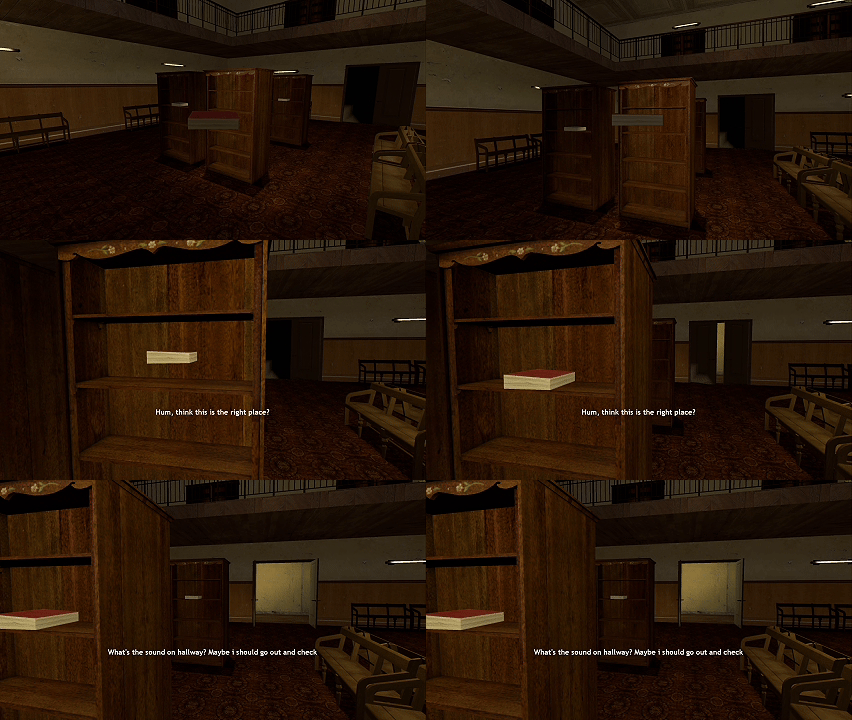
Object collect & reposition puzzle


Design Goals
The level is divided into five main sections, each introducing a new spatial concept while gradually increasing psychological tension:
-
Regular Mansion
-
Looped basement
-
Collection room
-
Transformed Mansion
-
Open Yard
LDD Map

Pacing Control
The overall level progression is built around a Tension–release Cycle. As players progress through the mansion, each section introduces increasingly abnormal spatial experiences to build psychological tension, followed by brief moments of relief before the next escalation.
By carefully alternating between tension and relief, the pacing maintains player engagement, prevents emotional fatigue, and makes each subsequent abnormal event feel more psychologically impactful.

Tension Release cycle
Level Detail
Regular Mansion
The level starts in a normal environment to establish baseline expectations.
At this stage, players can freely explore the space and get familiar with the layout, while also learning parts of the narrative through interaction.

This section is intentionally designed to feel stable and predictable.
Then as players progress, puzzles gradually introduce with the environmental changes, which begin to shift the space away from this normal state.
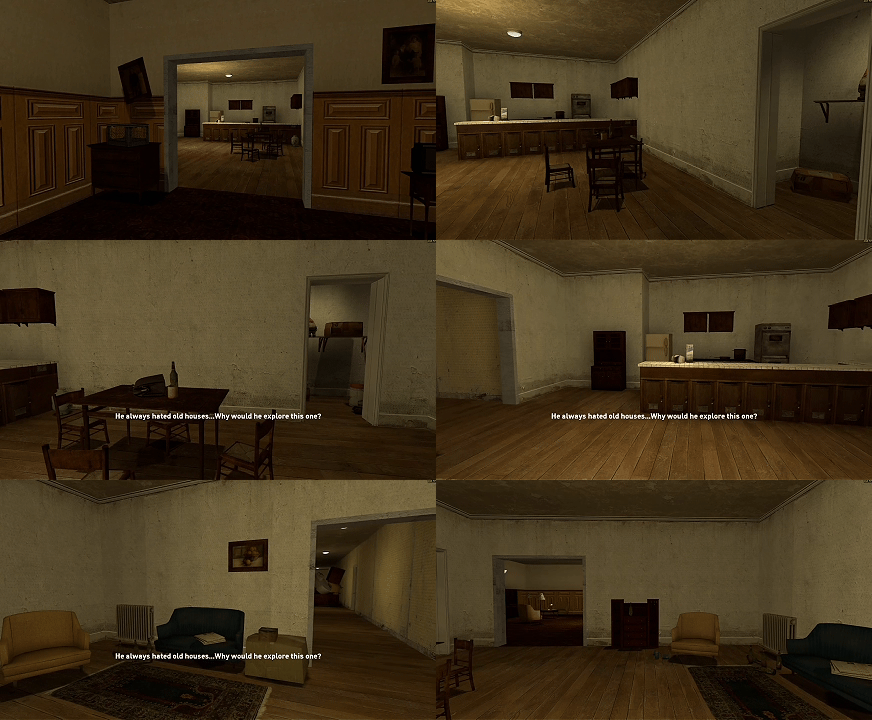
Looped Basement
The basement serves as the first major escalation in the level's pacing.
Its triangular layout guides players through two consecutive loops. While the overall route remains familiar, environmental changes, new puzzle states, and altered spatial relationships make each traversal feel increasingly unfamiliar.

This structure introduces the looping mechanic while gradually teaching players to question the reliability of the environment.
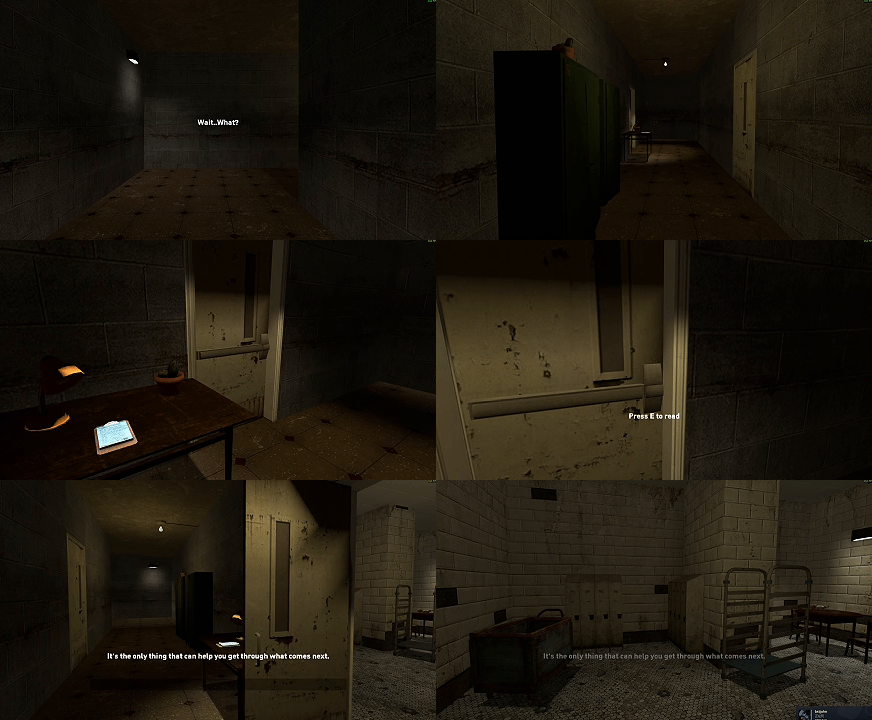
Collection Room
The Collection Room reinforces the looping mechanic while increasing the player's sense of confinement.

Players revisit the same room four times.
By combining repetition with environmental variation, this section encourages players to question their memory of the space while building psychological tension through familiarity.


Transformed Mansion


In this section, players return to the mansion they explored earlier in the level.
The overall environment has been transformed with impossible architecture, and visual anomalies. Through design these changes, create a contrast between the player's memory of the original space and their new experience.

Bedroom & Bathroom in normal Mansion
Reformed


Bedroom & Bathroom in transformed Mansion

Open Yard
The Open Yard creates a strong contrast against the previous interior spaces, offering players a temporary sense of openness and relief. This moment slows down the overall pacing and gives players the impression that they may be close to escaping.
However, this sense of hope and relife is intentionally misleading. The yard is designed as another short loop, revealing that the player is still trapped and pushing the tension toward its climax.
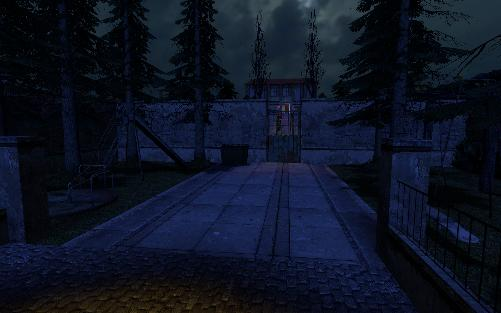
CourtYard Loop 1

CourtYard Loop 2

CourtYard Loop 3
Spatial Design Techniques
Non-Euclidean Architecture
Looping
Structure
Environmental
Shitfing
Constrained
Space
Environmental Design
Design Focus
-
Extreme verticality
-
Distored Structures
-
Inverted Structures
-
Physical rule-breaking spaces
Non- Euclidean Structure
Spaces that breaks traditional spatial logic through impossible layouts, inverted spaces, and distorted connections.
By using impossible architectural layouts, this section creates spatial uncertainty and challenges the player’s mental map.
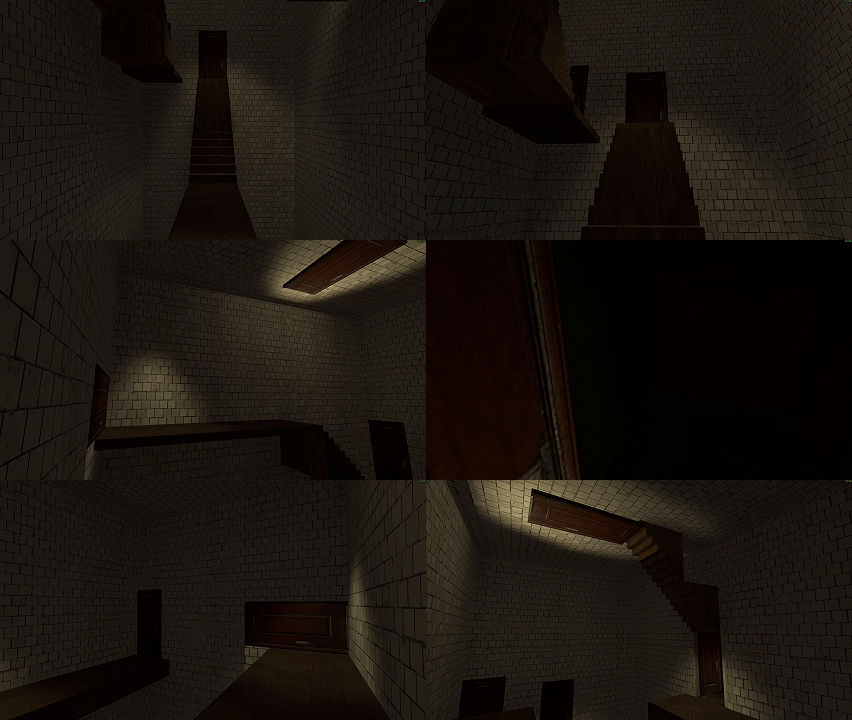
stairs appear disconnected but connect through movement

Curved Hallway
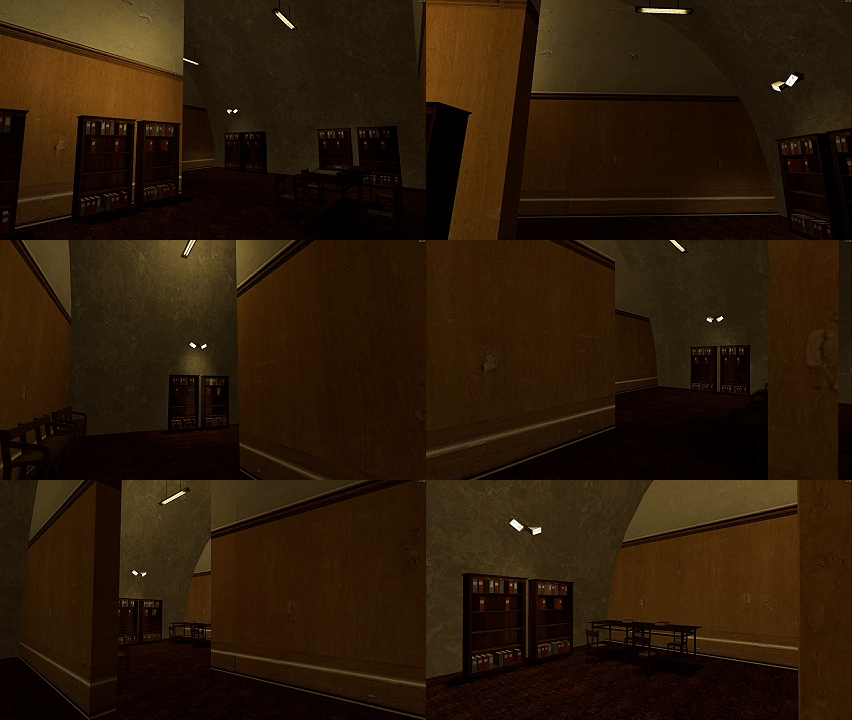
Distorted Library
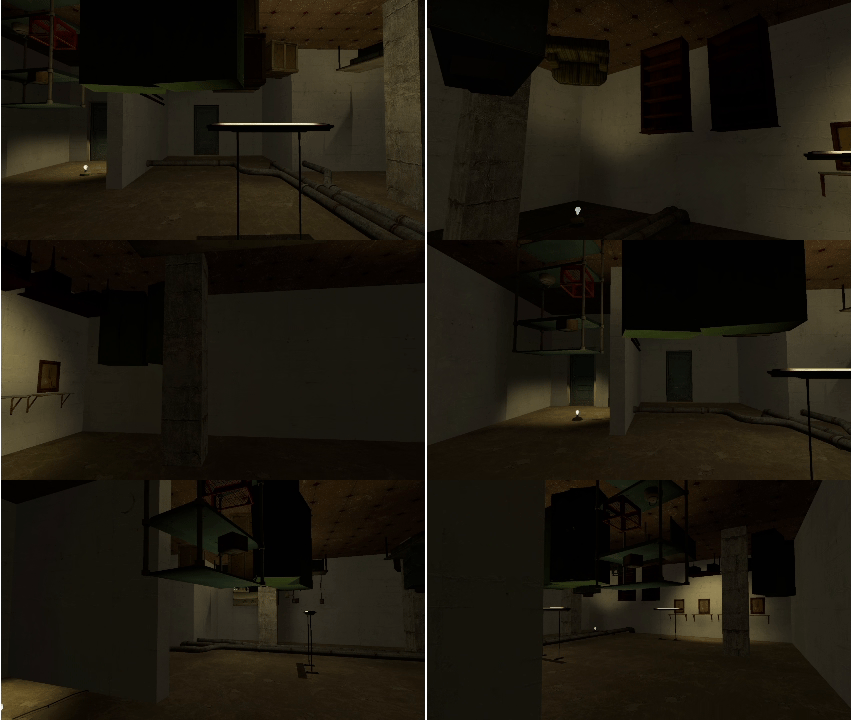
Upside-down Space
Looping Structure
The looping section reuses familiar spaces with subtle changes in layout, lighting, and object placement.
The goal is not only to make the player feel lost, but to make them question whether the space has actually changed or whether their memory of the environment is unreliable.
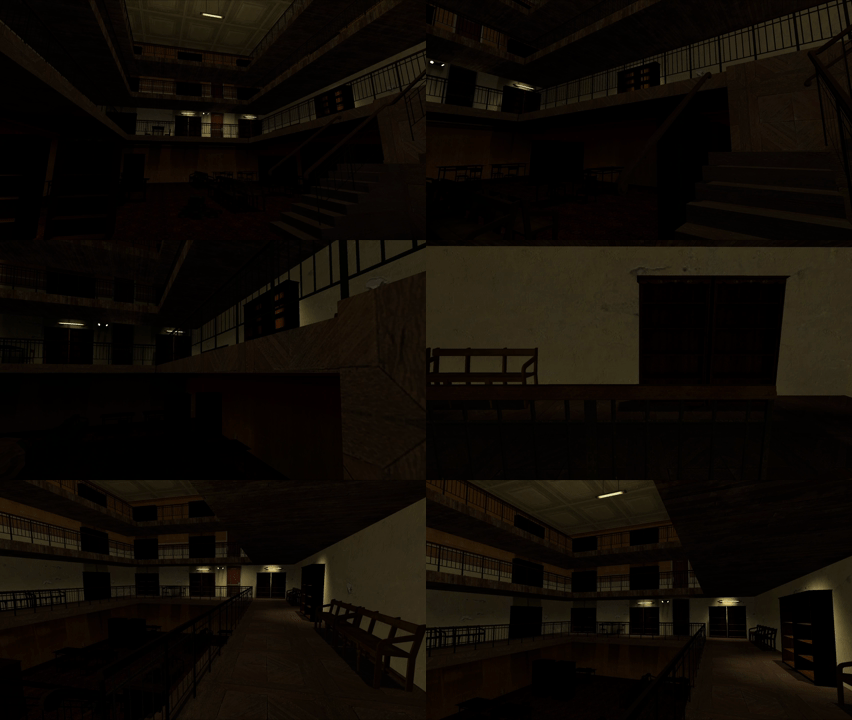
Looped layers of Library

Environment Shifting
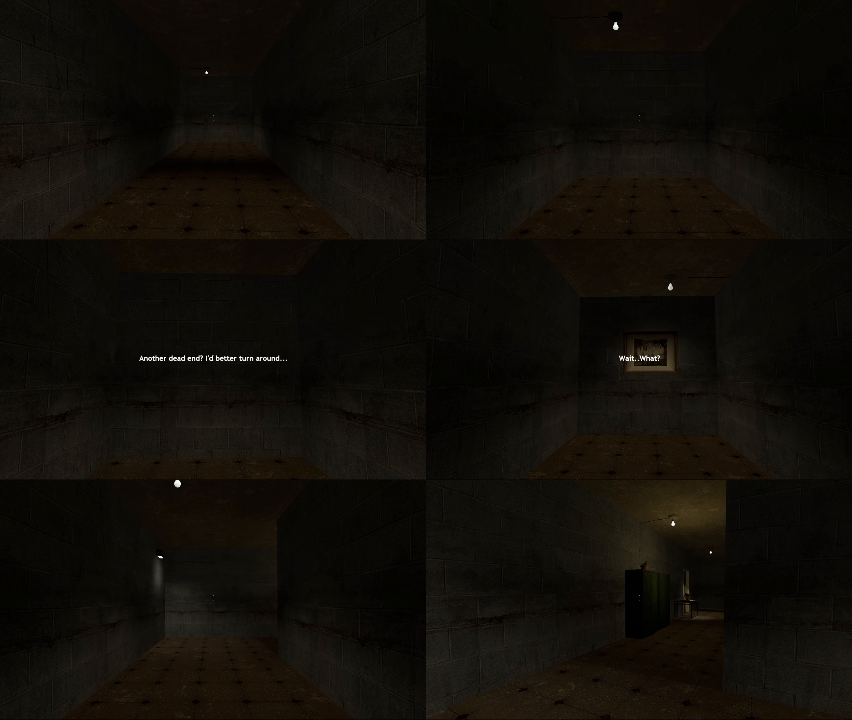
Environmental shifting is used throughout the level to reinforce uncertainty and make the mansion feel alive. It usually happens when player interact with the space.


Before Puzzle
After Puzzle
For example, a dead-end hallway transforms after the player solves a puzzle, revealing a new doorway that was not previously accessible.
This makes the mansion feel reactive while also guiding players toward the next objective.

Before Entering

After Entering
Hallway change after turning back
Environment shift blend with puzzle mechanics
Constrained Spaces

Squeezed Corridor
Constrained spaces are used to deliberately control pacing before major events.
The squeezed hallway limits visibility and movement, creating claustrophobia and vulnerability while encouraging players to cautiously move forward.


