


Kila: Hourbound is a third-person, action-adventure platformer game, set in the fantastical world of Aion, featuring melee combat, fast-paced movement and navigation, and the ability for players to strategically manipulate time to grant themselves special abilities.
Trailer

KIRA: HOURBOUND| Unreal Engine 5
My role: Level Design/ Combat Design
Team Size: 27 People
Development time: 20 Weeks
Platform: PC | Steam Deck
My Job
-
Level Layout design, from whitebox to polish
-
Core mechanic design, focusing on:
-
How to make it FUN
-
Explore mechanical depth, variation, and progression
-
-
Combat design
-
Prototyping boss encounters
-
Designing enemy behaviors and attack patterns
-
-
System design: defining and tuning gameplay parameters such as:
-
Jump Height
-
Dash Distance
-
Level Design
- Design the HUB Area
- Designed two campaign maps (four total)
HUB Area
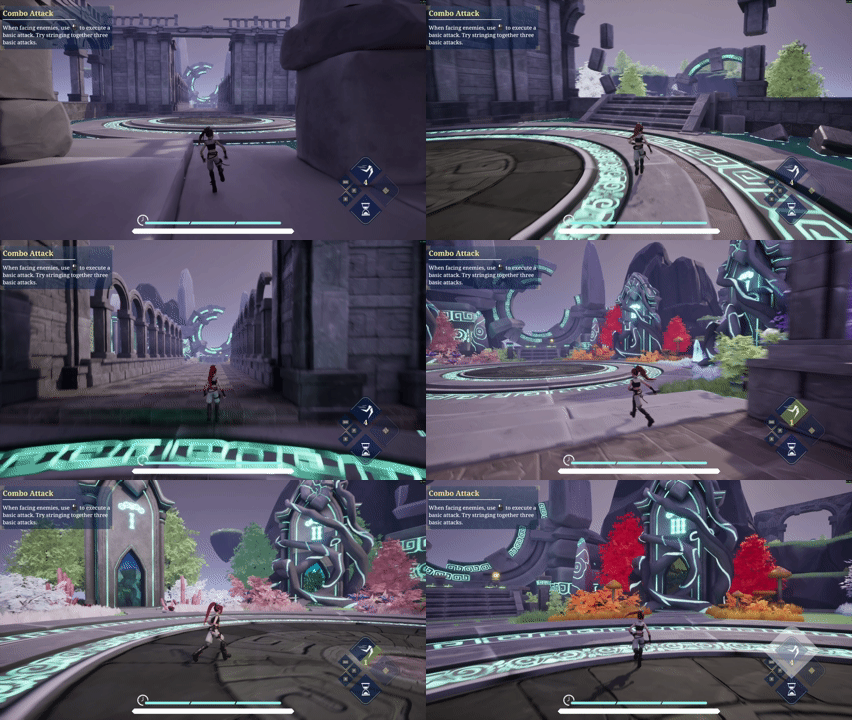
Design Thoughts:
The Hub Area serves as the player’s first point of entry, so the primary goal was to create a space that is clear, readable, and immediately communicates the structure of the game. This area connects three core functions: the Spawn Area, Training Area, and Level Selection.


The Training Area is designed as both an onboarding space and a safe environment for players to practice newly unlocked abilities.
However, aligning all spaces along a single linear path would force players to repeatedly traverse the same areas after completing levels, negatively impacting pacing.

To address this, the layout uses verticality to fold the space. By leveraging the game’s core mechanic—double jump—players can quickly return to the main hallway that connects to the Level Selection area, avoiding unnecessary backtracking through the training space.
In later iterations, the Training Area was refined into a looped layout that wraps around the other two sections. This structure provides sufficient room for practice while ensuring that returning players can move efficiently through the hub without re-entering spaces intended only for initial onboarding.
Level 2
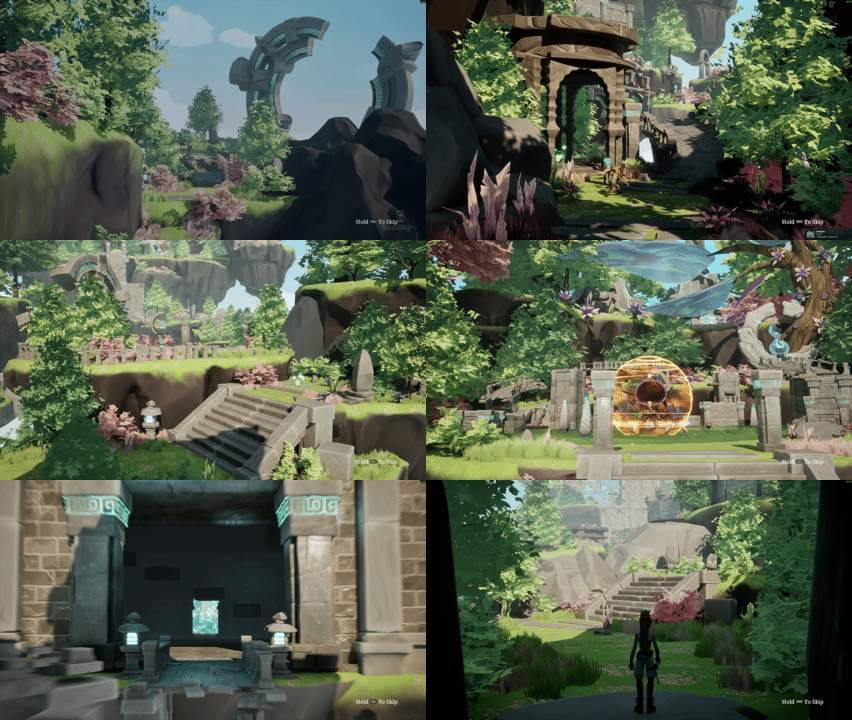
Design Thoughts:
As the player progresses into Level 2, the design focuses on expanding and reinforcing skills introduced in Level 1, while adding more depth and challenge.


1. Skill Reinforcement & Depth
Level 2 is designed to reinforce the skill set introduced in Level 1, while adding more depth to encourage players to practice skill combinations.
Since the core gameplay focuses on movement and platforming, I created several action blocks that require players to jump back and forth between platforms and cliffs in order to create some Wow moment during those action, and varied the jumping/climbing challenges throughout the level to maintain pacing and engagement.


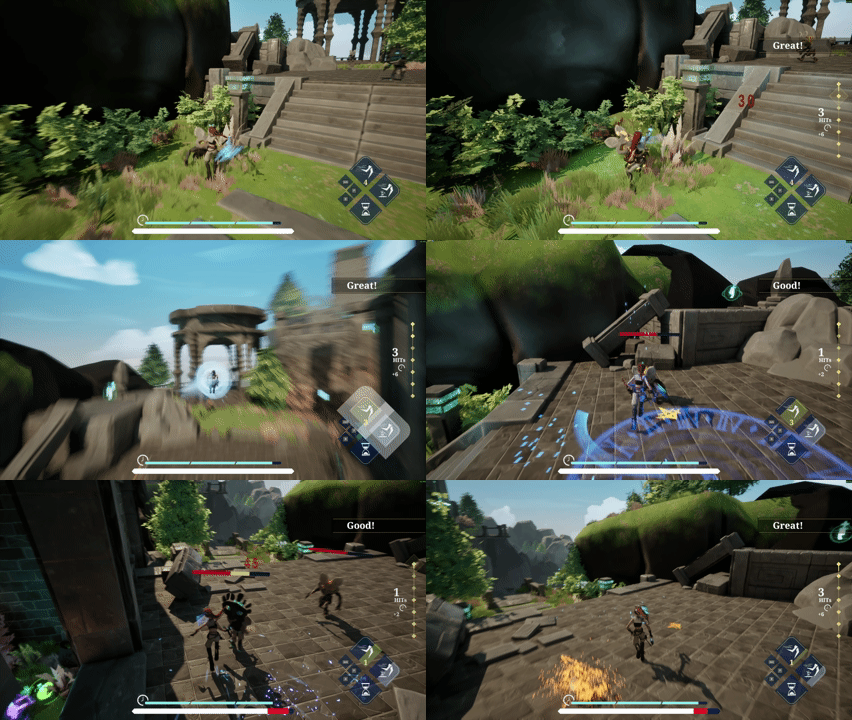
2. Introduction of Ranged Enemies and Vertical Combat
Ranged enemies are first introduced in level 2 to expand combat variety and encourage players to use vertical space more effectively.
The vertical layout helps guide players into positioning themselves strategically, allowing them to better handle different enemy types rather than relying solely on direct confrontation.


Many spaces emphasize verticality, giving players multiple options to maneuver through encounters.
3. Clear Objectives & Sightlines
Keeping the objective clear was a key design focus for this level.
I wanted the gameplay to feel exploratory while ensuring players always had a clear and readable sense of direction.
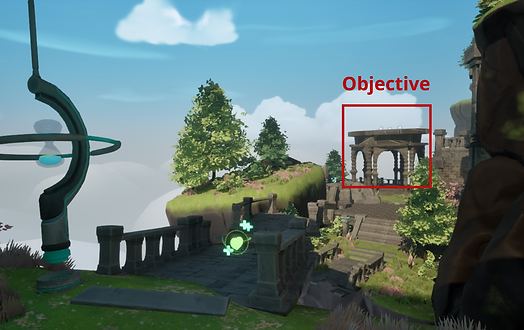
I spent a significant amount of time during the blockout phase refining sightlines and spatial framing to guide player movement naturally.
I paid close attention to how spaces open up and what players see when they enter a new area, making sure the intended direction is visually supported rather than explicitly told.
At the beginning of the level, players are also given an early glimpse of the endpoint.
A large, distinct landmark stands out from the surrounding environment, serving as a visual anchor. This helps players build a mental map of the space early on and reinforces a clear sense of progression throughout the level.

4. Non-linear Structure & Exploration

As a core design goal for the game, this level is intentionally non-linear.
Players are encouraged to explore the environment and find their own paths toward the end, rather than following a single, fixed route.
During map design, I created multiple branching paths throughout the level to give players more options to develop their own playstyles. These paths vary in difficulty and focus, offering different gameplay experiences.


Islands are designed to emphasize varied challenge types:
-
Some islands emphasize movement-based challenges, requiring players to use mechanics such as double jump or dash to progress, with relatively lower combat pressure.
-
Other islands focus more on combat, featuring open and flat spaces where enemy difficulty is increased. This structure allows players to choose how they approach the level based on their preferred playstyle.
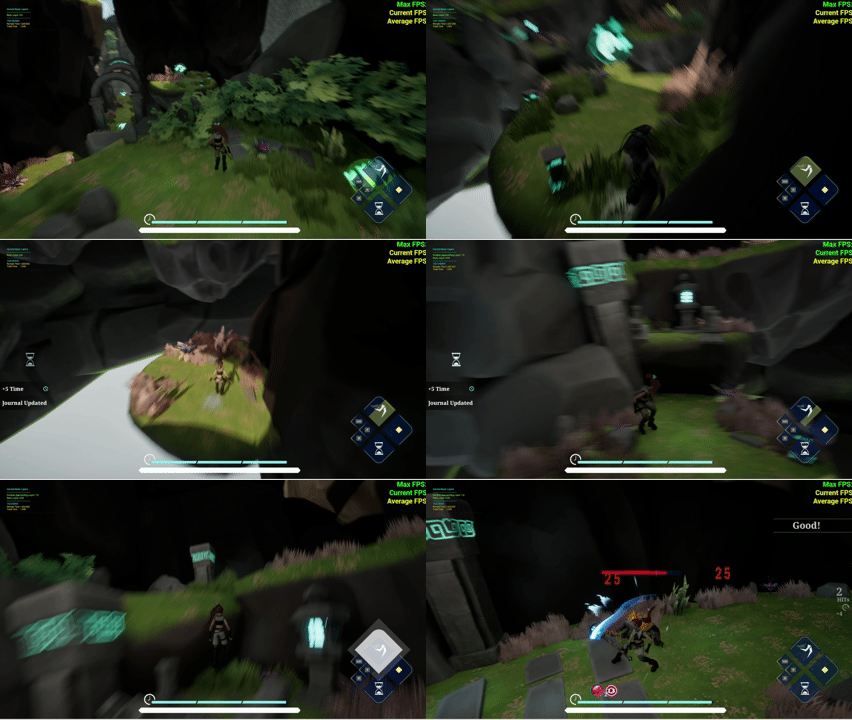
Level 2 gallary


Level 4
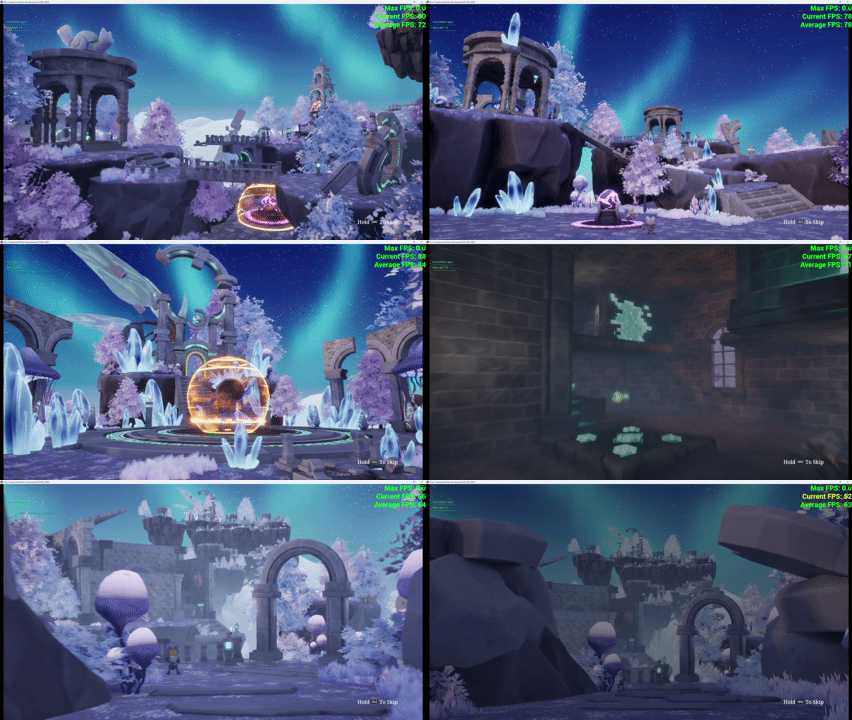
Design Thoughts:
As the final level of the game, Level 4 is designed to be the most challenging experience, requiring more advanced player skills as well as the combination of mechanics and design concepts introduced throughout the previous levels.
During the design process, I shifted the focus from a primarily exterior environment to a more interior-focused experience.

Puzzle Gameplay
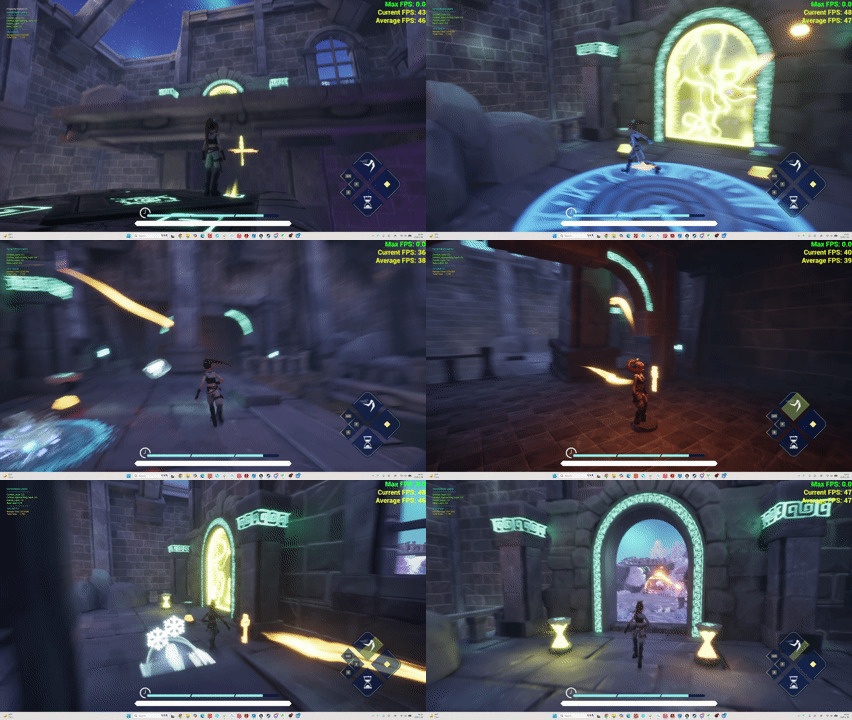
In the interior section, the space is combined with a collection-based puzzle.
Players reach the second floor upon entry and are required to explore the entire interior of the building .

I also applied clear design language to communicate player goals.
When players enter the space, they can immediately identify the exit, with a clear sense of where they need to go.
However, the actual playable path loops players around the interior of the building, allow them freedom to explore through searching for collectibles and unlock paths before finally returning to the exit and leaving the area.

There are more sightline control in the interior space, help guide the player’s attention and hint at their objective.

Flow in space with rich verticality
Arena Design

The Arena is divided into three distinct spaces, each serving a specific role during the boss encounter.
In Phase 1, players must navigate between these areas and destroy the power pillars to break the boss’s shield. This phase emphasizes movement, spatial awareness, and arena traversal under pressure.
Once the shield is removed, the encounter transitions into Phase 2, where players directly engage the boss in a focused combat confrontation to defeat it.
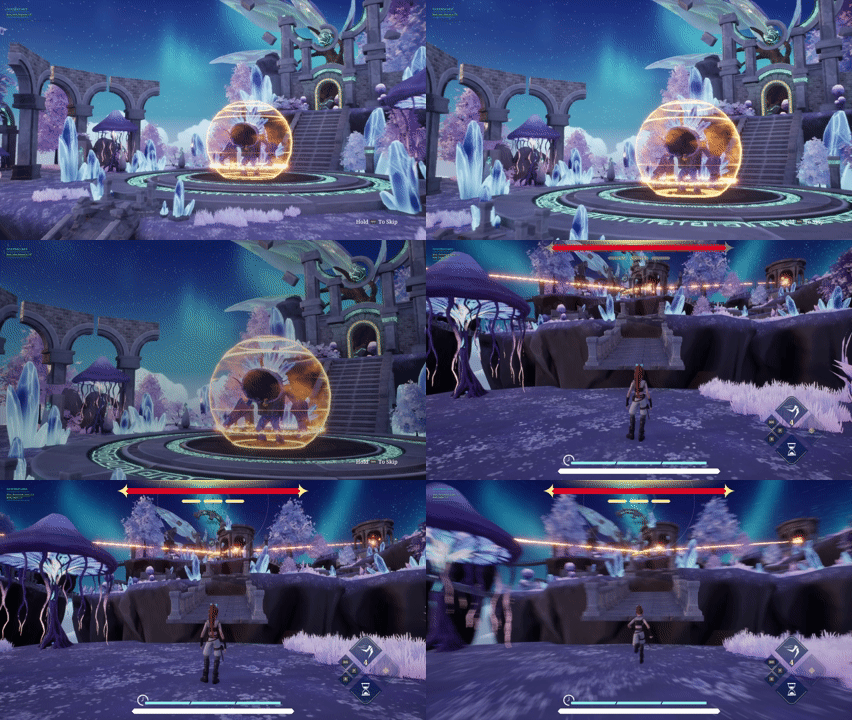
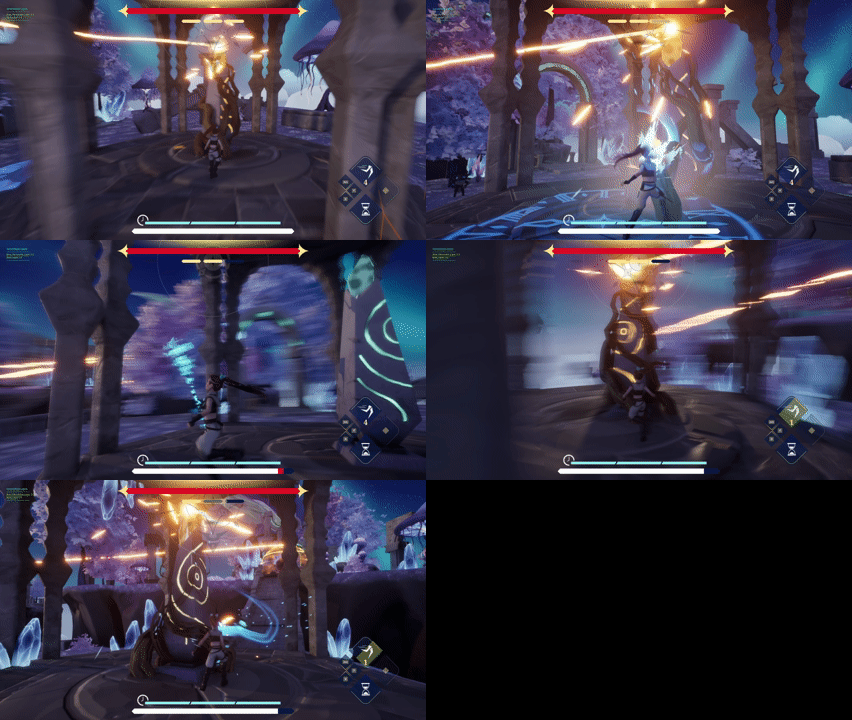
Break the Power Pillar that linked to Boss Shield
Visual Language
Visually, during the blockout phase, I took inspiration from Roman architecture, using elements such as broken roofs and pillars, not only fit the overall setting of the game, but also allowing players to climb and jump through the space, while helping guide visual conveyance.

Level 4 gallary


Boss Prototype

Enemy Behavior Design
